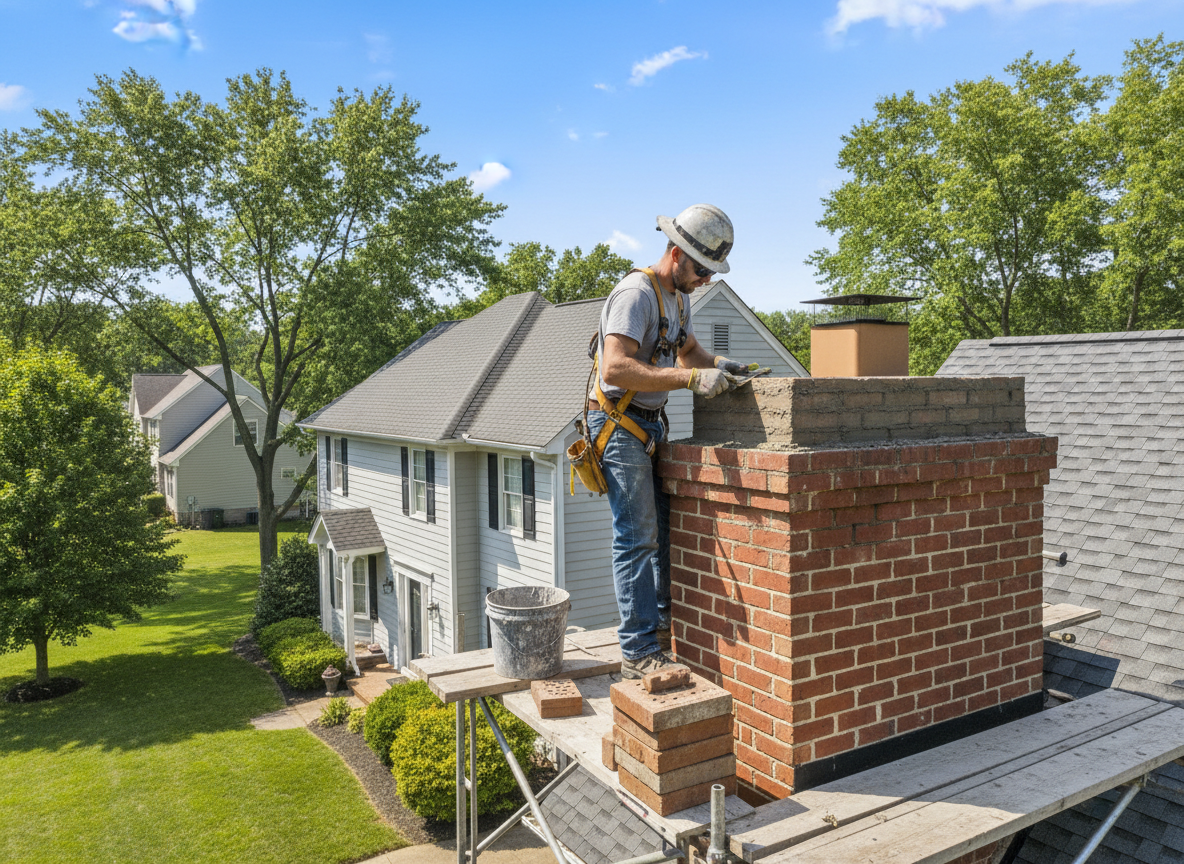
Centerville homes, especially those built in the 1960s through 1980s along streets like Yankee Street and near the Washington Township line, often feature masonry chimneys tied to the original brick construction. These chimneys face repeated freeze-thaw cycles through Montgomery County winters that open mortar joints and allow water to reach the flue liner. Left unaddressed, the moisture migrates into attic spaces and can stain ceilings or compromise draft.
Repair work here typically starts with a top-down inspection that checks crown condition, flashing integration at the roofline, and the condition of any clay or stainless liners. Technicians use high-temperature refractory mortar for repointing rather than standard type-N mixes because the latter fails faster under repeated heating and cooling. When a flue liner has cracked through, full-length stainless relining is often required to restore a proper draft and meet current venting expectations for wood-burning appliances.
Homeowners in the Centerville area sometimes attempt DIY sealant applications from big-box stores, but these coatings trap moisture behind the brick and accelerate spalling on the exterior face. Proper repair keeps the chimney structurally sound without adding combustible materials near the flue and maintains clearance requirements around the roof penetration.
Technician insight
In Centerville, the thing that catches most people out with Residential chimney repair is how quickly freeze-thaw cycles along the Stillwater River valley loosen mortar in 1970s brick chimneys; homeowners often notice interior stains only after the second or third winter, by which point water has already reached the attic sheathing.
Leaking Chimney on Older Centerville Home
Water stains appeared on a second-floor ceiling after a heavy January thaw. Inspection revealed open mortar joints and a deteriorated crown on a chimney serving a wood stove. The crew repointed the joints, rebuilt the crown with proper slope, and adjusted the flashing. No further moisture entered the attic during the remaining winter storms.
How it works
- 1
Site Inspection
Technician examines the chimney crown, mortar joints, flashing, and flue from roof level and interior cleanout to identify active water paths and structural movement.
- 2
Damage Assessment
Findings are documented with photos and explained on site, including whether repointing, crown rebuild, or liner replacement is needed to restore function.
- 3
Targeted Repair
Work proceeds with appropriate refractory materials, new flashing where required, and careful removal of failed mortar without damaging surrounding brick.
- 4
Final Verification
Chimney is tested for draft and water tightness before the crew leaves, with any attic insulation disturbed during access restored to original condition.
Pricing
Upfront quotes based on access, extent of mortar loss, and whether liner work is required; no hidden trip charges for Centerville addresses.