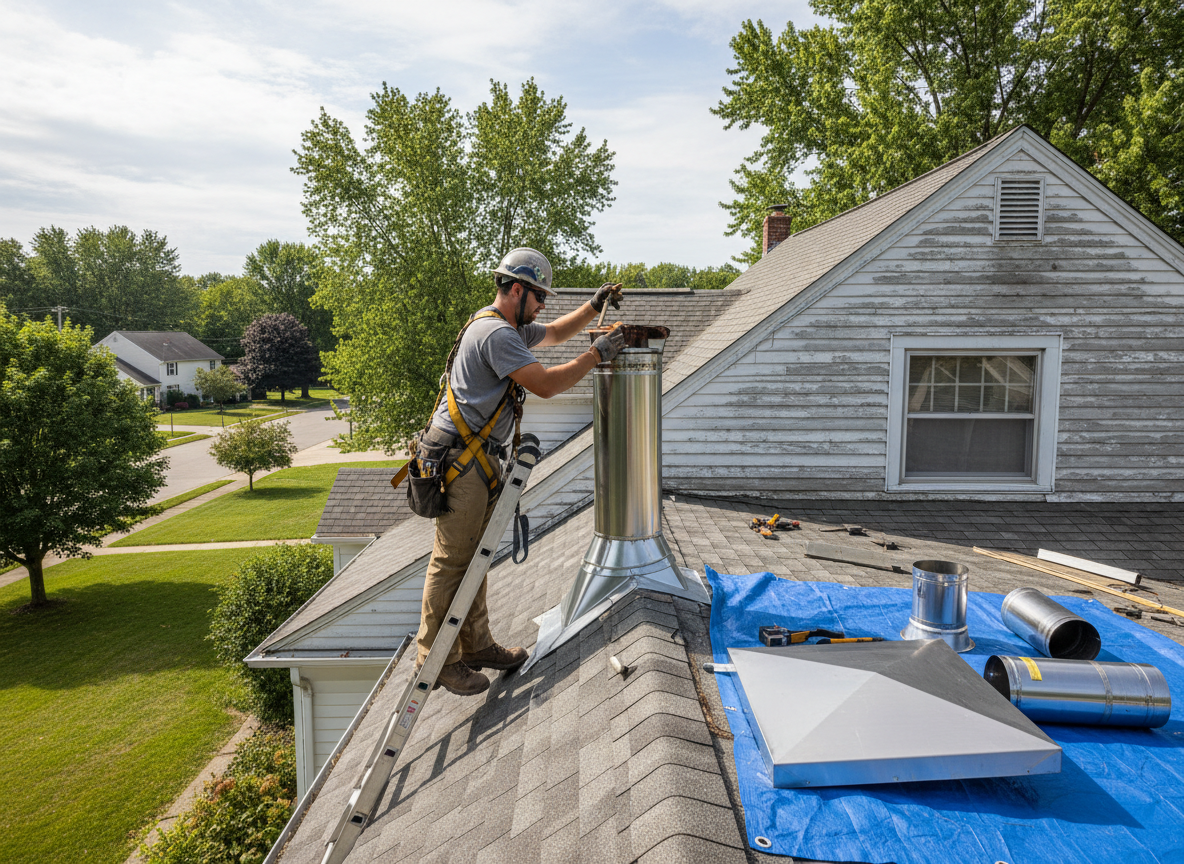
Prefabricated chimneys in Centerville homes often show wear at the seams where sections connect to the appliance flue. These units rely on precise gasket seals and stainless liners that degrade when condensation builds inside during shoulder seasons. Homeowners along streets near the address at 5300 Cornerstone N Blvd notice draft issues first because many houses sit on slight slopes that direct runoff toward the foundation and chimney base. Inspecting the chase enclosure for moisture intrusion before any liner work prevents callbacks once temperatures swing.
Edge cases appear when a prefab unit was added during a kitchen remodel and the roof pitch does not match the original chase cap. Water can track along the flashing and enter the attic space without obvious exterior stains. Local code requires proper clearance from combustibles and correct termination height above the ridge line. Skipping the chase inspection during repair leaves hidden framing damage that surfaces only after heavy spring rains.
Technicians check the appliance connector, the first section above the stove or insert, and the roof termination in one visit. Replacing a single damaged length of pipe is common, yet the surrounding sections must be examined for corrosion that started from the inside. Centerville properties built with these systems benefit from annual visual checks before the heating season because leaf debris from mature trees collects on caps and restricts draft.
Technician insight
In Centerville, the thing that catches most people out with prefabricated chimney repair is how homes near Cornerstone North Blvd sit on clay-heavy soil that shifts slightly each winter, loosening the lower sections where the unit meets the appliance even when the upper chase looks solid.
Settling Chimney on a Corner Lot
A Centerville homeowner reported weak draft and occasional smoke smell. Inspection showed the prefabricated sections had separated at the base due to minor foundation movement common on local lots. We replaced the lower two lengths, resealed the connector, and confirmed proper clearances. Draft returned to normal with no further odor issues.
How it works
- 1
Initial Assessment
Arrive at the Centerville property and examine the exterior chase, roof termination, and interior connections for visible damage or draft problems.
- 2
Component Inspection
Remove the cap and inspect each prefabricated section for gasket failure, corrosion, or misalignment caused by settling around the foundation.
- 3
Targeted Repair
Replace damaged lengths or seals while confirming clearances and proper support brackets remain intact throughout the run.
- 4
Final Verification
Reassemble, test draft with the appliance operating, and confirm no exhaust odors remain inside the home.
Pricing
Upfront quotes provided after on-site inspection.