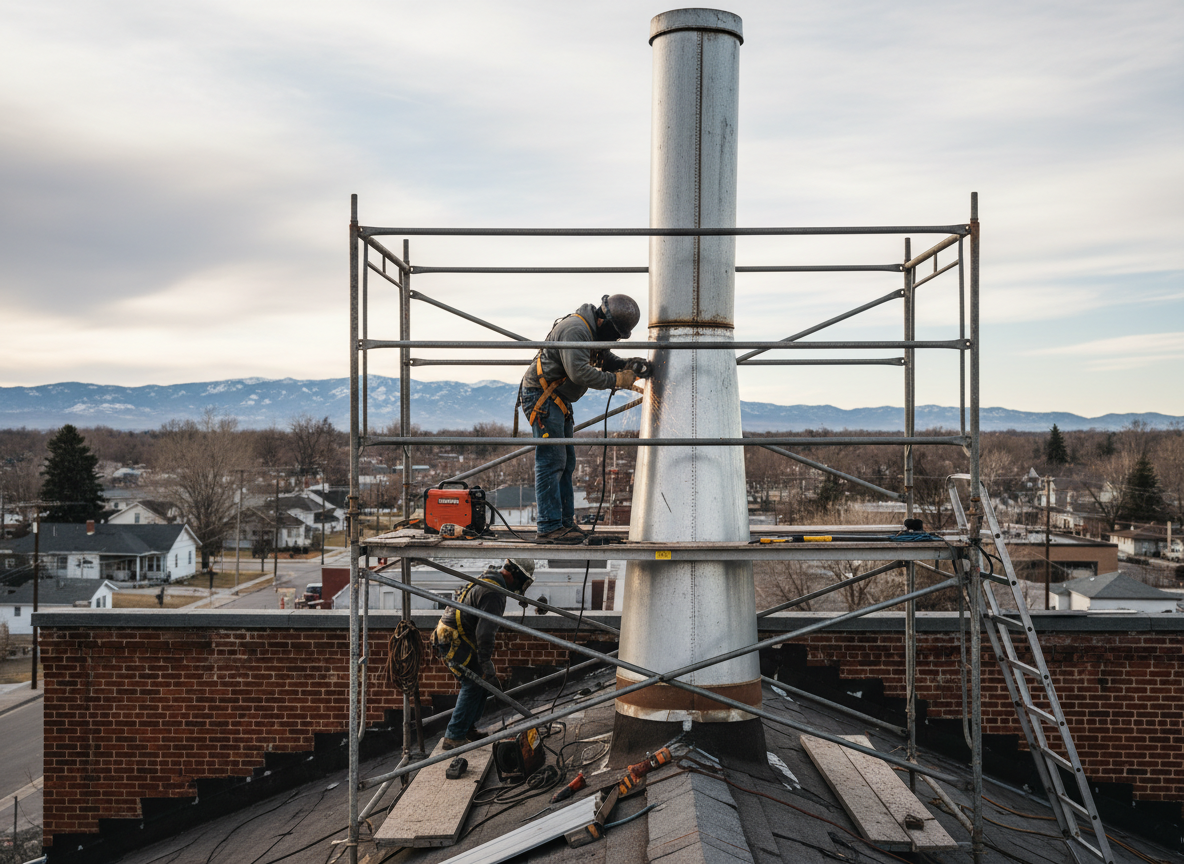
Metal chimneys in Centerville homes from the 1960s through 1980s often use galvanized or stainless liners that corrode from repeated freeze-thaw cycles and acidic flue gases. Moisture from Ohio winters collects inside the flue, especially where caps are missing or damaged, leading to pinhole leaks that allow smoke and creosote to escape into attics. Repair work here typically starts with a camera inspection to locate sections where the metal has thinned below safe thickness.
Technicians working around Cornerstone North Boulevard and nearby streets in Centerville frequently replace individual pipe sections rather than entire liners when damage is isolated. This approach requires matching the original gauge and type to maintain proper draft and code compliance with Montgomery County requirements. Edge cases include chimneys on split-level homes where the chase runs through exterior walls, exposing more metal to wind-driven rain and accelerating rust at joints.
Homeowners sometimes attempt to patch with high-temp sealant alone, but that fails quickly when temperatures swing from below freezing to above 400 degrees inside the flue. Proper repair involves cutting out the damaged segment, installing a new stainless steel piece with sealed seams, and verifying clearance from combustibles. In areas with heavier snow load like northern Centerville, caps must also be checked for ice damage that can crush the top of the metal stack.
Regular inspection after major storms prevents small rust spots from becoming full breaches that require emergency service. The work focuses on restoring the original metal integrity without adding liners unless the existing pipe is too deteriorated to hold a new section securely.
Technician insight
In Centerville, the thing that catches most people out with metal chimney repair is how the freeze-thaw cycles along the Great Miami River valley speed up rust on exterior metal chases, especially on 1970s split-level homes where the flue runs close to the roof edge and catches wind-driven snow.
Corroded Metal Liner Leak
A homeowner in a 1972 Centerville ranch near Cornerstone North reported smoke odor in the attic after heavy snow. Inspection showed pinhole rust along a three-foot section of the galvanized flue where it passed through an unheated chase. The damaged segment was cut out and replaced with matching stainless pipe, joints sealed, and the cap reset to prevent further moisture entry. Draft tested clear with no further leakage.
How it works
- 1
Initial Inspection
Camera scan of the metal flue and exterior chase to identify corrosion, dents, and separation points.
- 2
Damage Assessment
Measure wall thickness and map affected sections against Centerville housing styles and chase layouts.
- 3
Section Replacement
Remove compromised metal segments and install matching stainless or galvanized pipe with sealed joints.
- 4
Cap and Seal Check
Inspect and repair or replace the chimney cap and flashing to stop future water entry.
- 5
Draft Verification
Test airflow and confirm no smoke leakage before completing the job.
Pricing
Upfront quotes provided after on-site inspection; cost varies with number of sections replaced and access difficulty.