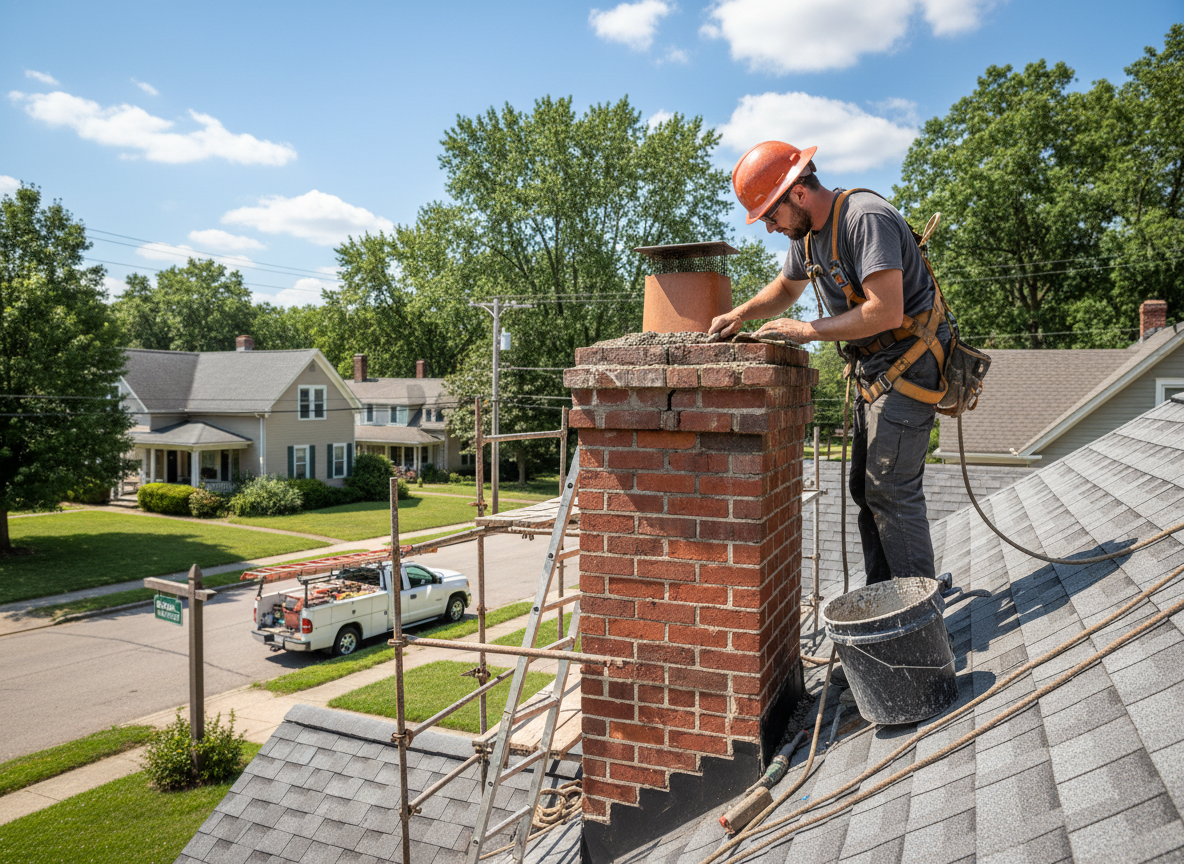
Centerville's housing stock from the 1960s through 1980s often features masonry chimneys tied to the original brick or block construction common in neighborhoods like Yankee Trace and around the Washington Township border. These chimneys face repeated freeze-thaw cycles each winter when daytime thaws allow moisture into mortar joints followed by overnight drops below freezing that widen cracks. Emergency calls frequently involve flue tile shifts or crown spalling after heavy snow loads, and crews must stabilize the structure before further water entry damages the attic or living space below.
When a chimney emergency arises in the Centerville area, the first priority is confirming whether the flue remains clear and the liner is intact enough to prevent carbon monoxide migration into the home. Older installations in Montgomery County homes sometimes lack modern stainless liners, so technicians check for gaps where exhaust could leak through settling mortar or displaced tiles. Storm-driven wind can also dislodge chimney caps or rain caps, allowing water to pool inside the flue and accelerate deterioration along the south-facing side that receives the most sun exposure during winter.
Repair work in this region must account for the clay-heavy soils that cause minor foundation movement over decades, which in turn stresses the chimney base where it meets the roofline. Technicians carry temporary weatherproof barriers and stainless-steel strapping on every truck to secure loose sections until permanent masonry work can be scheduled. Homeowners in the Centerville zip codes are advised to avoid running the fireplace once damage is suspected, since continued use can force hot gases through new openings and create additional interior staining or fire hazards.
Technician insight
In Centerville, the thing that catches most people out with emergency chimney repair is how quickly a small crown crack turns into attic water damage once the first hard freeze hits the older brick homes along Bigger Road—the south-facing exposure melts snow during the day then refreezes it right into the joints overnight.
Post-Storm Flue Shift in Yankee Trace
Heavy winds dislodged several flue tiles on a 1970s chimney serving a Centerville home near Yankee Trace. We found the liner had shifted enough to create an exhaust path into the attic space. Temporary stainless straps and a new rain cap were installed the same night to restore draft and stop further water entry. The homeowner was able to keep the furnace running safely until full liner replacement the following week.
How it works
- 1
Initial Assessment
Arrive on site and inspect the chimney exterior, crown, and flue opening for immediate safety risks such as loose masonry or blocked draft.
- 2
Safety Isolation
Secure the fireplace opening and install temporary barriers to prevent water intrusion or exhaust leakage while repairs are planned.
- 3
Stabilization Work
Apply stainless strapping, seal visible cracks, or install a temporary cap to restore basic function until full masonry restoration.
- 4
Documentation and Quote
Record conditions with photos, explain findings to the homeowner, and provide a written scope and timeline for permanent repairs.
Pricing
Upfront quotes provided after inspection; no hidden trip fees for Centerville calls.