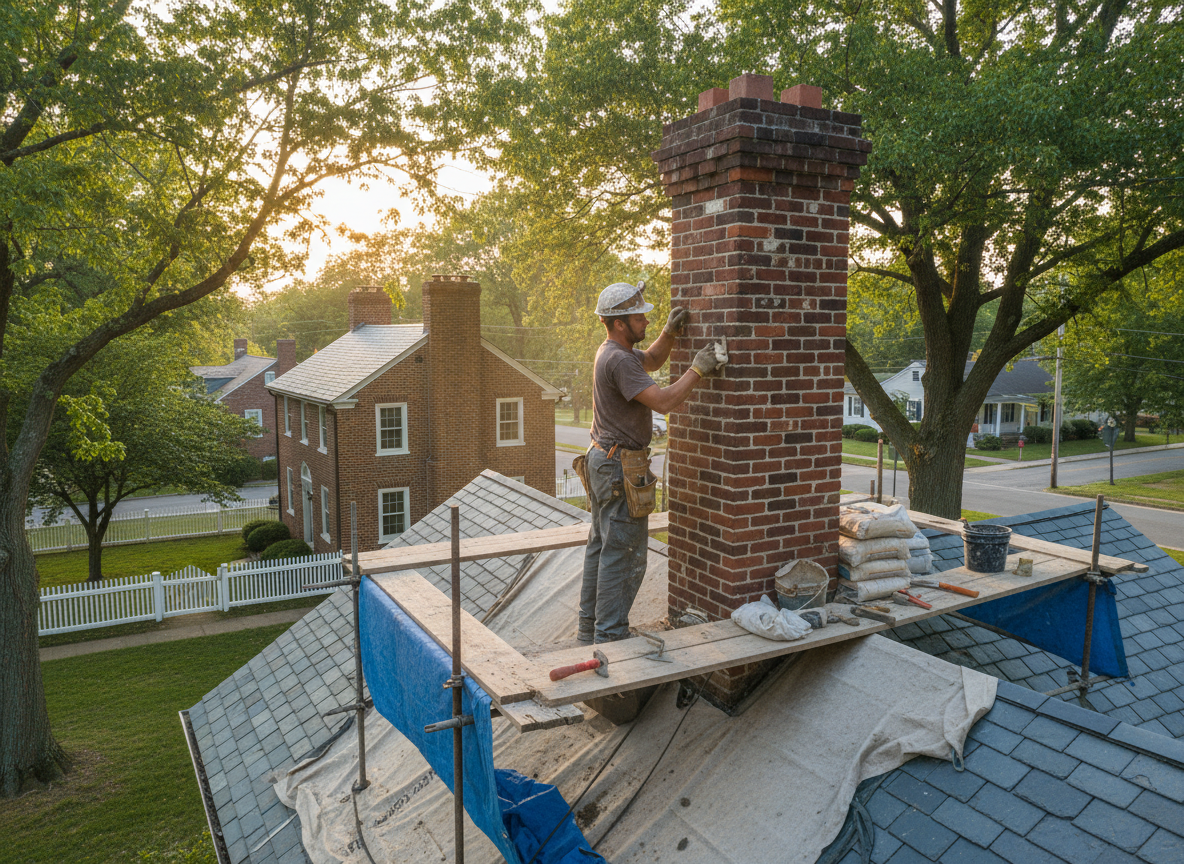
Centerville homes built from the 1950s through the 1980s often feature brick chimneys with single-wall flue liners that crack from repeated freeze-thaw cycles common in southwest Ohio winters. Water enters through deteriorated crowns or missing flashing around the roofline, then expands when temperatures drop below freezing, pushing bricks outward and allowing carbon monoxide pathways into living spaces. Restoration begins with a full height inspection using video scoping to locate separations that standard visual checks miss.
Mortar joints in these chimneys frequently fail where the stack meets the roof because asphalt shingles trap heat and accelerate expansion-contraction stress. We repoint with type N mortar matched to the original brick hardness rather than modern high-strength mixes that can spall softer historic units. Edge cases include chimneys serving both fireplace and furnace where negative pressure draws exhaust back into the home if the flue is not properly relined during restoration.
Homeowners in neighborhoods like Yankee Trace and near the Centerville Library commonly discover hidden damage only after a heavy snow load shifts the crown. We install new precast concrete crowns with drip edges and stainless steel rain caps sized to the flue diameter, then flash the base with step flashing integrated into existing shingles. This prevents the water intrusion that leads to interior staining on second-floor ceilings during spring thaws.
Code considerations in Montgomery County require that any relining maintain the original appliance venting capacity while meeting current clearance rules to combustibles. We document liner condition and draft performance before and after work so homeowners have records for future insurance or sale inspections.
Technician insight
In Centerville, the thing that catches most people out with chimney restoration is how the 1960s-70s ranch homes around Holes Creek trap water behind the crown because the original flashing was never stepped into the shingles. One winter of freeze-thaw and the bricks start walking outward before anyone notices the draft loss.
Ranch Home Chimney on Shetland Drive
Homeowner noticed white staining on the family room ceiling after a January thaw. Inspection showed the crown had cracked and water had traveled down a separated flue liner into the attic. We removed the old crown, installed a new precast unit with proper overhang, relined the flue, and re-flashed the base. The staining stopped and draft readings returned to normal.
How it works
- 1
Initial Assessment
Video scope the full flue length and examine exterior masonry for displacement or spalling from ground level to crown.
- 2
Damage Mapping
Document every failed joint, liner crack, and flashing defect with photos and measurements for the repair plan.
- 3
Masonry and Liner Work
Repoint joints, replace damaged brick, and install a new stainless liner sized to the appliances served.
- 4
Crown and Flashing Completion
Pour or set a new crown with proper overhang and integrate step flashing at the roofline.
- 5
Final Testing
Perform a smoke test and draft verification before signing off on the completed restoration.
Pricing
Pricing depends on chimney height, extent of liner damage, and whether brick replacement is required; quotes are provided after inspection.