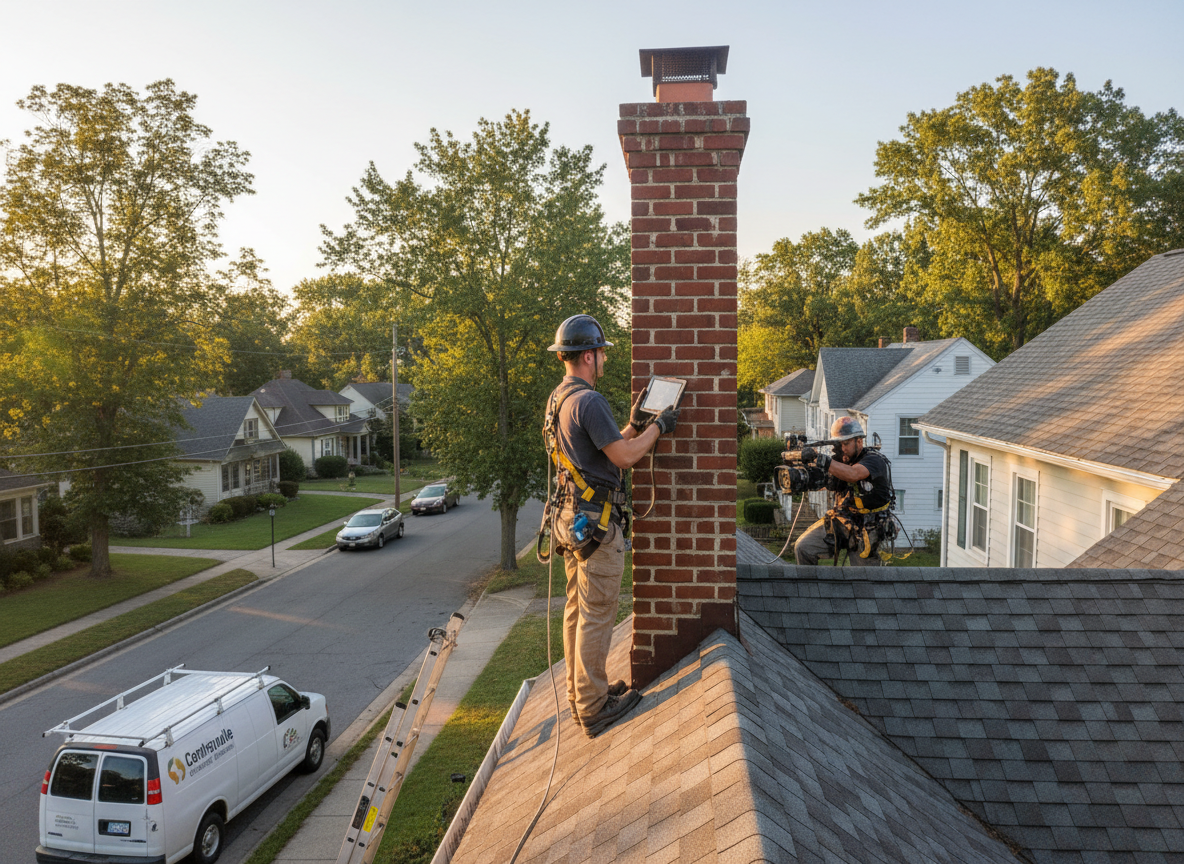
Centerville homes built from the 1950s onward often feature masonry chimneys tied into the original brick or block construction. These chimneys face repeated freeze-thaw cycles that crack mortar joints and allow water intrusion behind the flue liner. An inspection starts with an exterior assessment of the crown, flashing, and chase condition, then moves to interior camera work to check for creosote buildup, liner separation, and offset blocks that restrict draft. Homeowners in neighborhoods near the Centerville-Washington Township border frequently discover hidden deterioration that only appears once the camera reaches the attic penetration.
Montgomery County code requires proper chimney height relative to roof pitch and clear termination above nearby obstructions. During inspection we verify that the flue serves only one appliance, that the smoke chamber is properly parged, and that the damper operates without binding. Older two-story homes near Yankee Street commonly show settling that tilts the chimney slightly, creating a positive pitch that traps water and accelerates spalling. We document every finding with photos and note any immediate safety concerns such as missing rain caps or gaps at the roof line.
Inspection also covers the connection to the heating appliance itself. In Centerville’s split-level and ranch-style houses the furnace or boiler flue often joins the chimney at an angle that creates turbulence and incomplete combustion. We check for proper draft hood alignment, confirm that combustion air openings meet current requirements, and test for backdrafting under normal operating conditions. This step prevents carbon monoxide migration into living spaces during the long heating season.
Technician insight
In Centerville the thing that catches most people out with chimney inspection service is how quickly water gets behind the liner on 1960s-70s brick chimneys once the crown cracks; the freeze-thaw cycles here turn a small gap into full liner failure within two winters.
Hidden Liner Separation on a Ranch Near Kettering
A homeowner in a 1968 ranch near Bigger Road called after noticing occasional smoke smell. Camera inspection revealed a separated clay liner at the second-floor joist line caused by minor chimney settlement. We documented the gap and recommended a stainless steel liner insert before the next heating season.
How it works
- 1
Exterior Assessment
We examine the crown, flashing, and visible masonry for cracks, missing mortar, and water staining from the ground and ladder.
- 2
Interior Camera Scan
A high-resolution camera travels the full flue length to record liner condition, creosote deposits, and any offsets or obstructions.
- 3
Appliance Connection Check
We inspect the furnace or fireplace connection, verify draft hood alignment, and test for backdrafting under load.
- 4
Written Report
Findings are compiled with photos and prioritized recommendations delivered same day.
Pricing
Inspection pricing is quoted after we confirm chimney height, number of flues, and access conditions.