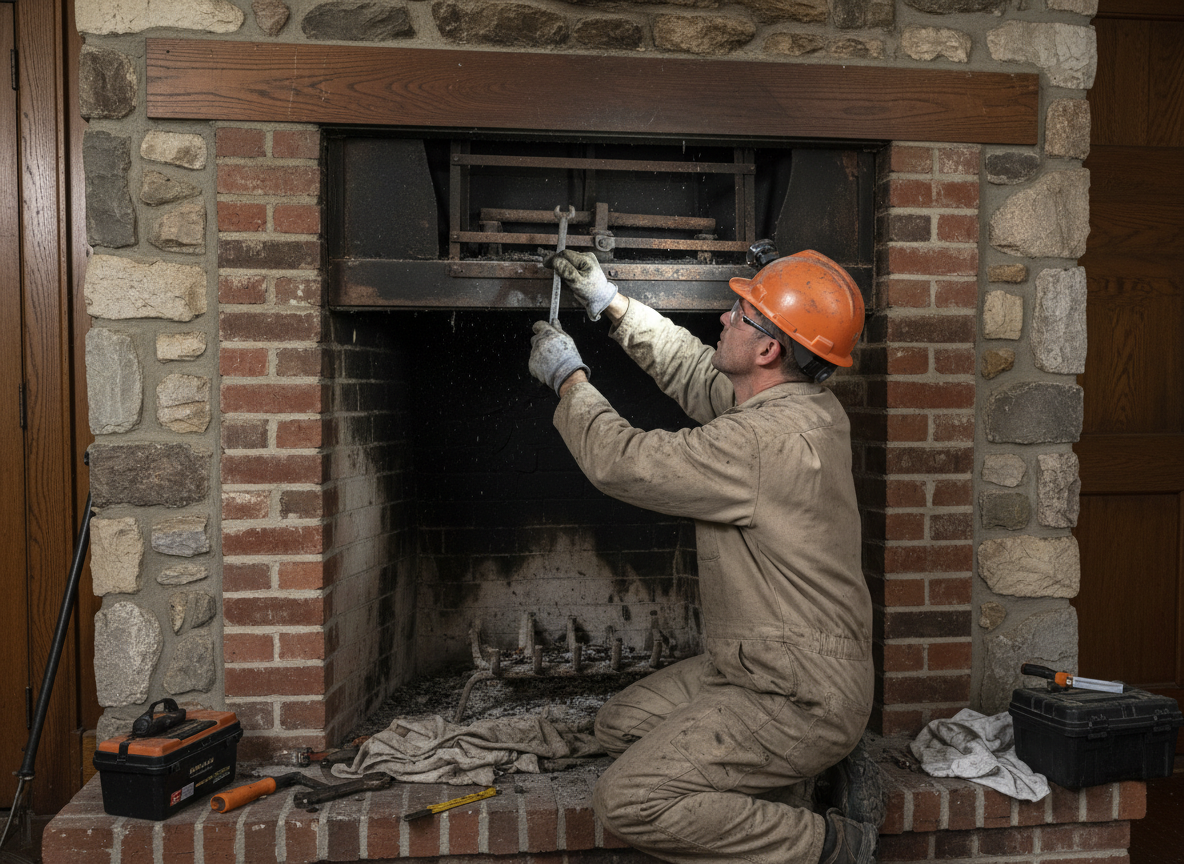
Centerville homes built from the 1960s through the 1980s commonly feature masonry chimneys with cast-iron or early stainless dampers that corrode from repeated freeze-thaw cycles and wood smoke acids. When the damper plate warps or the pivot rod seizes, smoke backs up into living spaces and heat loss increases through the flue. Technicians at Axis Wrench, based at 5300 Cornerstone N Blvd, first drop a camera to confirm the exact failure point before any disassembly.
Access in Washington Township split-levels and two-story colonials often requires working from the roof rather than the firebox because many original installations placed the damper high in the flue. We carry both cast-iron replacements and 304 stainless upgrades sized for standard 8x12 and 12x12 flue tiles found in Kettering and Centerville. Every repair includes checking the flue tile integrity and the crown flashing seal, since water entry above the damper accelerates the next failure.
Ohio code requires dampers to close tightly when not in use; we test the seal with a smoke pencil after reassembly. Homeowners in the Centerville area frequently discover the problem only after a winter power outage when they try to use the fireplace and find the plate jammed open or closed. We keep common sizes on the truck so most jobs finish the same day without ordering parts.
Seasonal Considerations
Winter storms and heavy spring rains in the Miami Valley accelerate corrosion on exposed damper components. Scheduling inspection before the first freeze prevents mid-season failures when temperatures drop below 20 degrees.
Technician insight
In Centerville, the thing that catches most people out with chimney damper repair is the age of the split-level homes along Bigger Road where the original damper sits eight feet above the smoke chamber and the only safe access is from the roof during winter winds.
Jammed Damper on Larger Road Home
Homeowner in Centerville reported smoke entering the family room during the first cold snap. Camera inspection revealed a warped cast-iron plate seized on its pivot rod eight feet up the flue. We removed the old damper from the roof, installed a stainless replacement sized for the 8x12 tile, and confirmed a tight seal with a smoke pencil before leaving.
How it works
- 1
Initial Inspection
Camera scan from the firebox and roof to locate the damper and assess corrosion or warping.
- 2
Component Removal
Disconnect the handle linkage and extract the damaged plate or rod without disturbing surrounding flue tile.
- 3
Replacement Installation
Fit new cast-iron or stainless damper, verify smooth operation, and reseal any disturbed mortar joints.
- 4
Function Test
Close and open the damper multiple times while checking for smoke spillage and proper seal.
- 5
Final Documentation
Provide photos of the old and new components plus written notes on flue condition.
Pricing
Cost depends on chimney height, access method, and whether a stainless upgrade is chosen over standard cast iron.